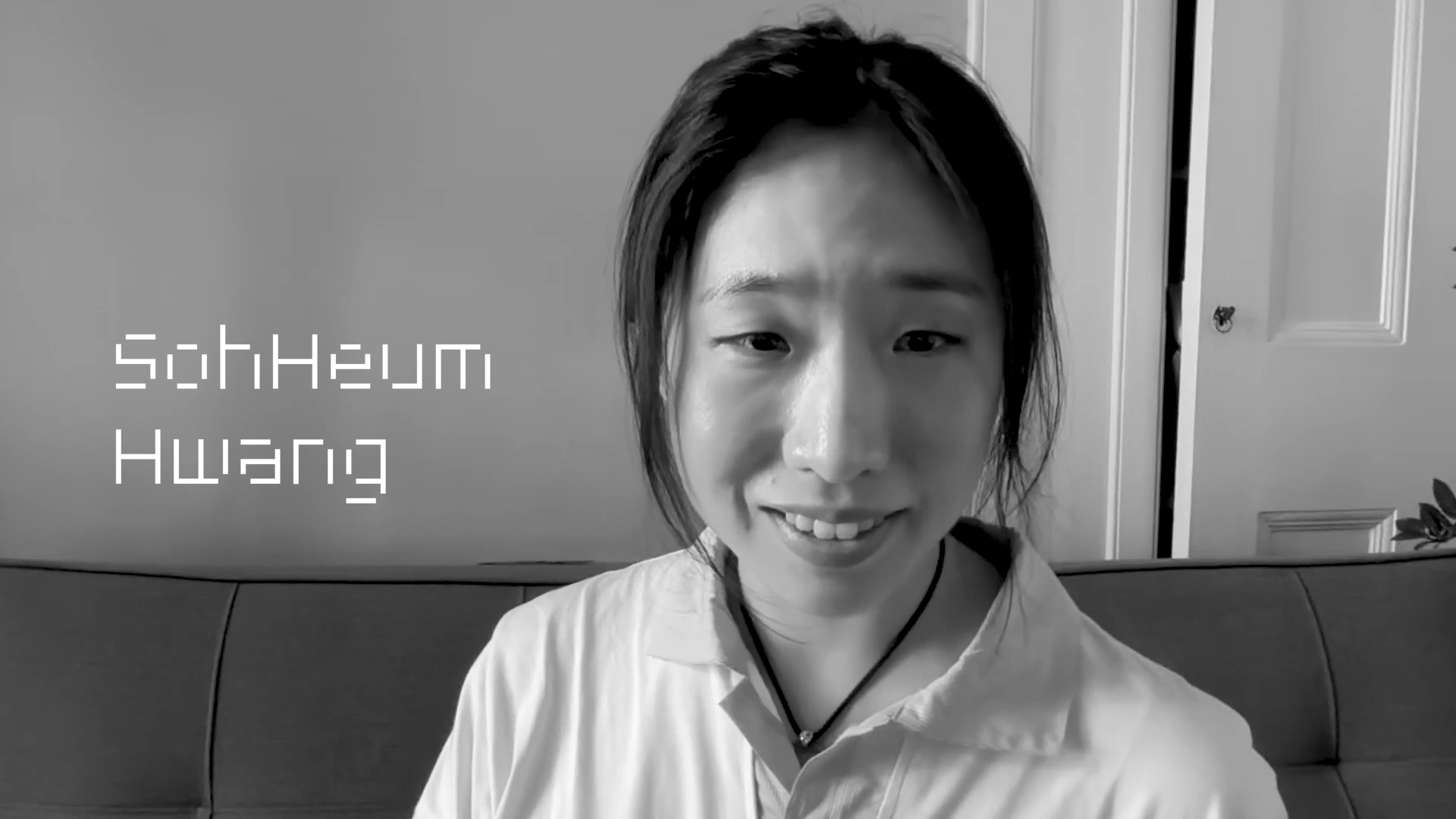
SohHeum Hwang
In this episode of Design Futures, SohHeum Hwang discusses how AI coding agents are changing UX practice: moving designers from static prototypes into working software, while making judgement, storytelling, alignment and craft more important.
Summary
SohHeum Hwang frames her practice around useful tensions: regulation and innovation, digital tools and physical craft, structured systems and exploratory design. Her background spans in-house teams, consultancies and public-sector or regulated environments, including McKinsey, the Bank of England and Scarlett.
The conversation focuses on how AI coding agents change the level of design iteration. Instead of moving from polished static screens into a separate engineering phase, designers can now test working features, use design tokens and component rules, and refine the UX in real code before returning to the visual craft.
Her view is optimistic - AI agents are useful when a designer gives them a clear, vertical direction, but weaker for broad horizontal exploration across many concepts. That means the enduring value of designers shifts toward problem framing, taste, storytelling, stakeholder alignment, human nuance and knowing why a product should exist.
Transcript
Can you introduce your practice?
SohHeum describes herself as a designer interested in creativity that comes from contrasting values. Her work has moved across in-house teams, consultancies and regulated sectors, including McKinsey, the Bank of England and Scarlett.
She is drawn to fields where design can be overlooked, such as medical regulation, financial regulation and pharmaceuticals. That interest in contrast also shapes her personal practice: she is deeply curious about AI tools, but also values off-screen making through ceramics.
How easy is it to use AI inside regulated industries?
Access varies by organisation. Some environments allow the latest tools, while others limit them for security or operational reasons.
For SohHeum, tool access matters, but it is not the whole story. The deeper design skill is how you think through the problem space, and designers can still learn the tools in their own time even when an organisation moves more slowly.
Which AI tools are proving useful in her workflow?
She has experimented with tools including Figma Make, Cursor and Claude, but keeps returning to Cursor because it feels flexible for building prototypes, features and small digital products.
The biggest shift is that designers can now build things they previously needed engineering support to test. That changes prototyping from a representational activity into a more direct way of exploring working software.
How has AI changed design iteration?
The basic act of iterating has not gone away, but the level has changed. Designers are no longer limited to static screens or clickable prototypes; they can launch working features, test them with users and refine the actual behaviour.
This can reduce the need to perfect every screen before development. A designer can give the agent a framework, test whether the feature works, and then spend more time later on tokens, visual polish and the finer craft of the experience.
How does she keep agent-built work aligned to a design system?
SohHeum uses Cursor rules to tell the agent how to behave: follow the existing components, avoid creating unnecessary new components, ask before adding new patterns, and keep code as minimal as possible.
Those rules evolve as the work evolves. Prompting becomes a new design skill because the agent's output depends on how clearly the designer frames the context, constraints and expected behaviour.
Where do coding agents still struggle?
Agents are strongest when a designer has a specific concept and wants to go deep: test responsiveness, interactions and details around one direction.
They are weaker for broad horizontal exploration. In Figma or on paper, a designer can quickly sketch ten directions; with an agent, each route takes time, tokens and cost. Exploratory breadth is still easier in visual or physical design tools.
What does this change mean for the designer's role?
SohHeum sees AI reducing maintenance work, admin tasks, pixel-pushing and some design-system housekeeping. That frees designers to spend more time on creative judgement, feature quality, storytelling and later-stage craft.
It also lets product managers, engineers and stakeholders produce quick prototypes, which can help early brainstorming. The designer's value becomes less about being the only person who can make a screen and more about knowing what should be made and why.
What human skills remain hard for agents to replace?
The strongest human skills are taste, judgement, storytelling, problem framing and the ability to connect people across teams. Designers align stakeholders, bring user needs back into the room, and understand nuance in a way that software cannot simply automate.
SohHeum expects every designer to work with some kind of agent, but sees that agent as an extension of the designer's own framing. If the designer sets a small context, the agent works inside a small box; if the designer frames a more ambitious problem, the agent can help explore a larger one.