Tony & Evie Brook
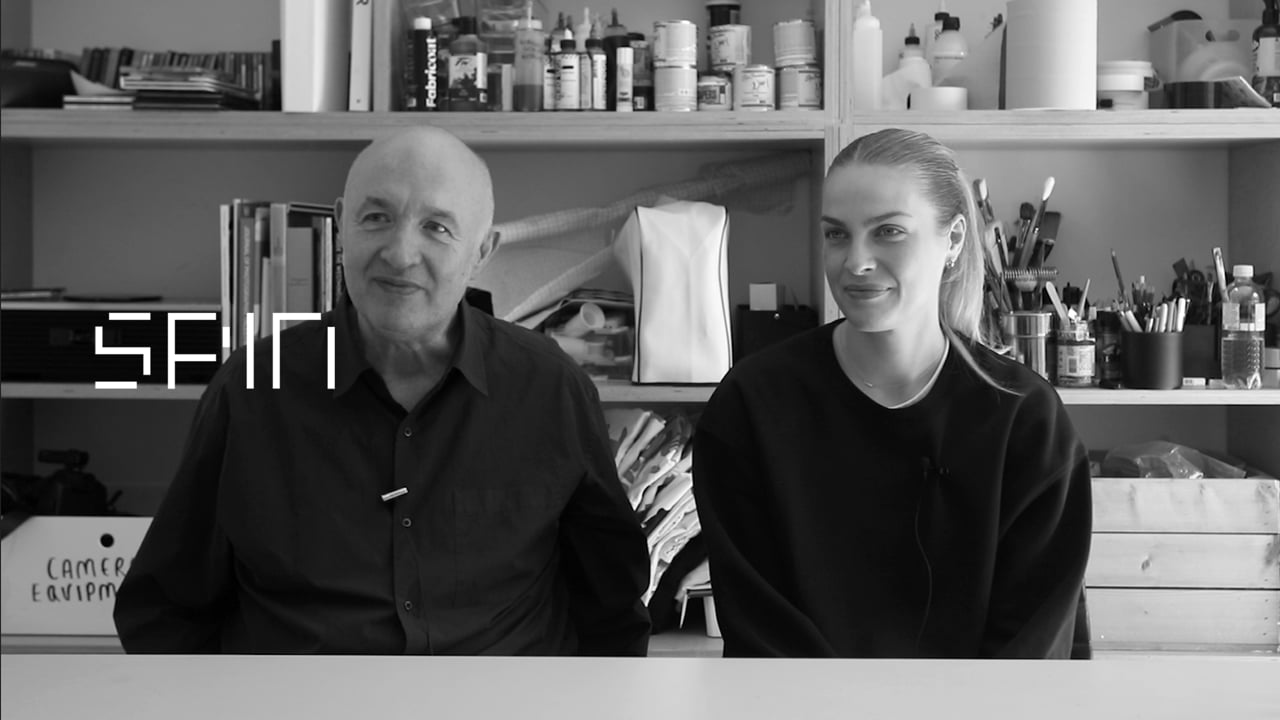
In this episode of Design Futures, Tony and Evie Brook of SPIN discuss craft-based studio practice, visual research, taste, authorship, and why AI is more useful as knowledge support than as a replacement for human creative judgement.
Summary
Tony and Evie Brook describe SPIN as a graphic design studio shaped by craft, technology, research and collective judgement. Founded in 1992, the studio has always used new tools, from multimedia and motion to today’s AI systems, but its process remains deliberately physical: work is printed, placed on the wall, discussed, lived with and made to earn its place.
Their view of AI is open but restrained. It is useful as knowledge support, especially for complex technical subjects, but less convincing as a source of finished visual work. For SPIN, the value of design still sits in taste, authorship, human judgement, material experimentation, the unexpected route and the fingerprints of the people making the work.
The conversation also frames AI as another major technology shift in a longer history of design disruption, from desktop publishing to Photoshop. Some production roles may narrow, but the deeper skill becomes more important: research methodology, visual literacy, comfort with uncertainty and the ability to form an independent point of view.
Transcript
How does SPIN describe its studio practice?
SPIN was founded in 1992 as a commercial graphic design studio and evolved through multimedia, motion and multidisciplinary work into the graphic design practice it is today. Tony and Evie describe technology as something the studio has always been interested in, but never as something that should dictate the work.
The studio process remains collective and physical. Work is printed, placed on the wall and discussed by the whole team. No single designer owns a whole project; the aim is for everyone's judgement to improve the work.
Why is making work physical important?
Putting work on the wall pauses it. On screen, it is easy to keep nudging things by a pixel and mistaking adjustment for progress. Once printed, the work becomes tangible and has to earn its place.
SPIN asks clients to live with work in the same way: print it, put it up and look at it over time. The longer something sits in the real world, the more instinctive and analytical judgement can start to surface.
How is SPIN using AI now?
AI is useful to SPIN as research and knowledge support, especially when the studio needs to understand complex technical subjects quickly. It can explain difficult topics in a human, concise way and give the team a better starting point.
It is not yet central to SPIN's visual identity process. The studio has tested AI image tools, but prefers to work with illustrators, makers and its own in-house craft process because those routes bring interpretation, expertise and authorship.
What is missing from AI-generated visual work?
Tony and Evie describe much current AI imagery as slick, smooth and close to stock photography. It can be surprising, but it often lacks the control, friction and happy accidents that come from making things physically and iterating in the studio.
For SPIN, the point is not just to create an output. The value comes through drawing, painting, photographing, making textures, testing animations and pushing an idea beyond the expected route.
Could AI support visual research and design history?
The most interesting future use case is not copying the look of a famous designer or generating work in the style of SPIN. Tony is more interested in AI introducing designers to methodologies, ways of thinking and the history behind visual culture.
A model trained around design history, Unit Editions or a deep studio archive could help people understand where to start, how designers thought, and why certain movements or approaches matter. The danger is reducing that literacy to imitation.
What does AI reveal about the value of designers?
SPIN has seen clients arrive with AI-generated logo ideas that match the brief in words but still feel wrong. That experience can clarify what clients are actually paying for: taste, judgement, challenge, interpretation and the ability to find unexpected directions.
The conversation returns repeatedly to authorship. Clients come to SPIN because they want SPIN's opinion. The work has to carry a point of view, not simply reproduce what someone already thinks they want.
How does this compare with earlier technology shifts?
Tony compares AI with the arrival of Macs, desktop publishing and Photoshop. Those tools changed production almost instantly and removed certain roles, from typesetters to specialist retouchers, while forcing the industry to adapt.
He expects AI to change parts of design work too, but argues that deeper design education becomes more important, not less. Research methodology, visual literacy, comfort with uncertainty and personal judgement are the skills that survive tool changes.
What might AI mean for creativity?
Tony and Evie remain open and broadly optimistic. AI may become an extraordinary tool in many areas, and designers will learn to use it where it genuinely helps.
But they are sceptical that it can replace the voice of an individual. In graphic design, creativity and art, people still want to see fingerprints, idiosyncrasy, taste and the human point of view behind the work.