Ceci n’est pas un agent — It’s the face we give it
AI companions need a visual language of their own. From furry Gremlins and graphic dots to Surrealism and Magritte, Alex Swain asks how designers should make invisible intelligence visible.
Why AI companions need a visual language of their own

Over the past few months, frontier AI labs and hyperscalers have been launching their own versions of the agentic companion. If you have ever felt overwhelmed by booking a restaurant, replying to a friend or organising a holiday, there is now a service ready to help—for the token price of a monthly subscription.
Phone a friend? Call my agent.
We have entered a new phase in which a virtual assistant can build a website, manage a calendar, research a trip and remember the complicated details of our lives. The cultural references are already waiting for us: the loyal droid, the omniscient HAL, the discreet personal secretary. But none of these models quite describes what is arriving.
Every new relationship is built through conversation. Over time we learn another person’s rhythms, values and boundaries. Trust accumulates through thousands of small exchanges. Personalities click or repel. We read not only words but pauses, expressions, clothes, posture, humour and hesitation.
An AI assistant develops through a related process. Language is the shared interface. It listens, remembers and acts on the ideas we discuss. As synthetic voices become more fluid—interrupting, hesitating and leaving space for us to respond—the interaction begins to borrow the cadence of human conversation. The image is no longer one-way; it can reply.
But what should this new relationship look like?
We can already see a field of agents competing for our attention and, eventually, our loyalty:
- Dots from OpenAI
- Grok from xAI
- OpenClaw, created by Peter Steinberger
- Hark, founded by Figure CEO Brett Adcock
- Muse from Meta
- Claude Duet from Anthropic
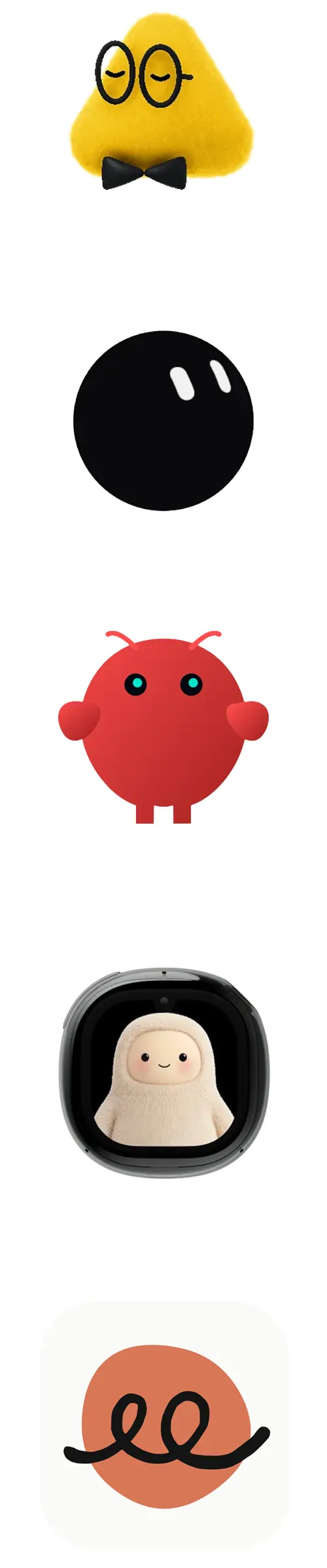
They take different approaches to personal intelligence, but each raises the same design question: what form should intelligence take when it enters everyday life?
Beyond the friendly blob
The visual identities emerging around AI tend to fall into a few familiar categories: the glowing orb, the colourful knot, the cute mascot, the chat bubble and, at the other extreme, the humanoid robot. Each is trying to make an invisible system understandable. Each also carries assumptions.
An orb suggests calm, ambient intelligence. A mascot suggests play and loyalty. A human face implies empathy, intention and moral understanding—qualities the underlying system may not possess. The closer the imitation gets, the more important the distinction becomes.
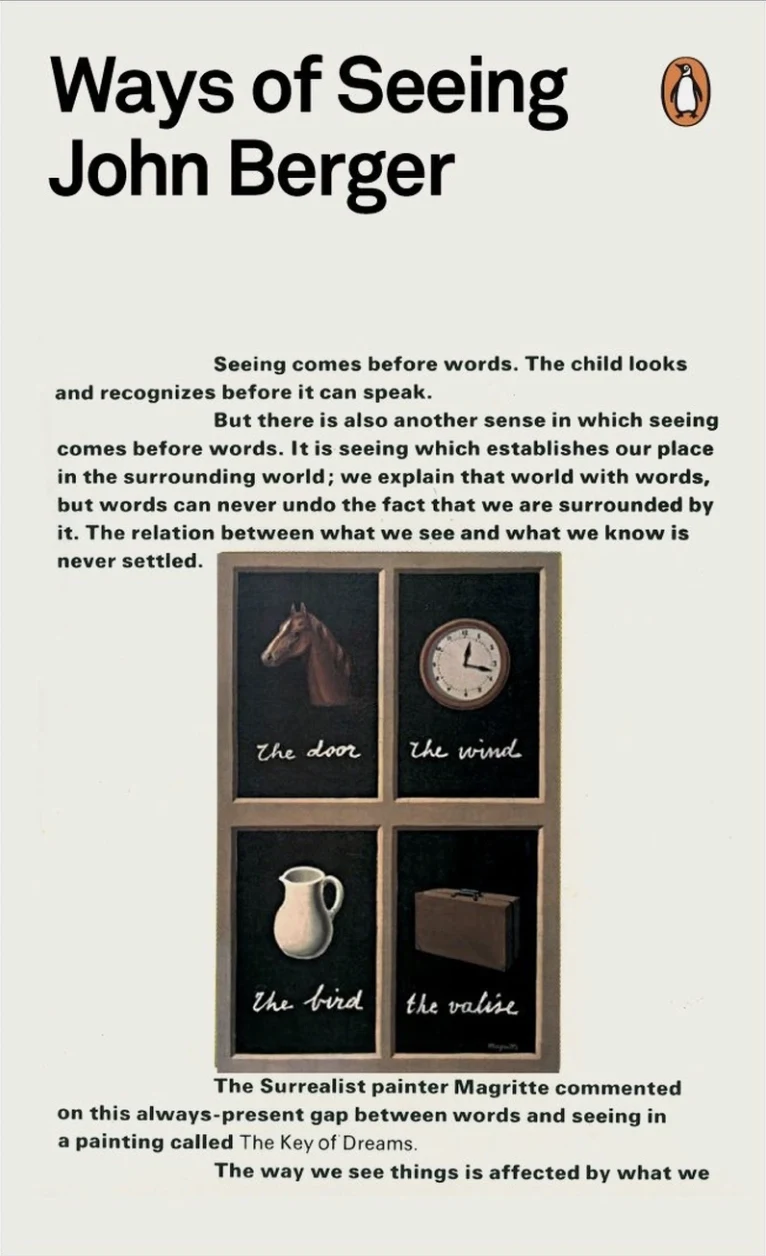
John Berger opened Ways of Seeing with four words: “Seeing comes before words.” Before an agent answers us, its form has already framed the relationship. It tells us whether the system is a tool, a character, a servant, a collaborator or a presence with apparent agency of its own.
This matters because technical capability will not be the only basis on which people choose an agent. Many systems will be able to book the same restaurant or remember the same birthday. We will stay with the one that feels legible and trustworthy—the one whose behaviour, voice and form cohere. A chief executive rarely changes a trusted assistant casually; accumulated context is too useful. The same may be true of personal AI.
As a creative director, dissecting visual form is a daily activity. I question why one brand attracts me while another feels false; why a film poster or a car design can delight, disappoint or even offend me. Perception is partly constructed from prior knowledge, and trust is compounded through association and behaviour.
So I am not convinced that the defining form of a new intelligence should be another soft, cuddly blob.
The mechanical eye
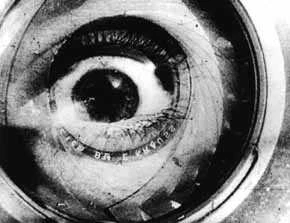
The invention of the camera transformed seeing by breaking the image away from the limits of the human eye. It could isolate a moment, enlarge it, repeat it and carry it far beyond the place where it occurred. In his 1923 Kino-Eye manifesto, Soviet filmmaker Dziga Vertov made the machine’s difference explicit: “I am kino-eye, I am a mechanical eye. I, a machine, show you the world as only I can see it.” His ambition was not to make the camera imitate human vision, but to use its non-human capabilities to reveal a new world.
The lesson for AI identity is direct. Vertov gave the machine a language of its own; he did not hide its difference behind a human face. If artificial intelligence is another technology that changes what humans can perceive and do, its form should express that new capability rather than mimic an older kind of intelligence.
A surrealist intelligence
If AI is a genuinely new kind of presence, perhaps its identity should feel more abstract, stranger and more ambitious.
Surrealism offers a useful precedent. The movement developed in Europe after the First World War, shaped by artists and writers searching for liberation from the rational systems and social conventions that had culminated in mass destruction. Guillaume Apollinaire coined the term in 1917; André Breton published the first Manifesto of Surrealism in 1924.
Surrealism was not simply a visual style. Through its manifestos, the artistic and political movement asked artists to sign up to—and adopt—a shared set of ideas about reconciling waking reality with dreams and the unconscious. André Breton was its principal theorist; Salvador Dalí and René Magritte became central figures.
Surrealism moved through two phases, marked by Breton’s two manifestos. The first, published in 1924, established its ideas. The second, in 1930, became more political and imagined a point at which “life and death, the real and the imagined … cease to be perceived as contradictions.” That feels unexpectedly current. Today, a comparable contradiction is taking shape between organic humans and mathematical machines: different forms of intelligence learning to coexist.
The goal was not nonsense for its own sake. It was to make room for realities that rational categories could not contain.
That makes Surrealism unexpectedly relevant to AI. We are trying to relate to something that is both tool and character, familiar and alien, responsive and computational. It speaks in human language but does not have a human life. Designers should not try to hide this contradiction. The form should help people understand it.
This is not a person
Gagosian’s current London exhibition shows how durable René Magritte’s ideas have become. In The Treachery of Images, he painted an ordinary tobacco pipe with the words Ceci n’est pas une pipe—“This is not a pipe”—written beneath it. The statement reminds us that an image is not the object itself, however convincing the resemblance. Magritte took ordinary things like apples, clouds, rooms and faces and made them strange enough for us to see again. He exposed how readily images and words manufacture reality, and how quickly we mistake representation for the thing it represents.
AI needs the same visual honesty.
The face, orb or furry creature on a screen is not the intelligence. It is a form factor through which we interact with it. If it looks too human—should all agents have eyes?—we may attribute understanding or form misleading associations. If it looks too trivial, we conceal the scale of the system’s capabilities behind something closer to a toy.
The design opportunity lies between those extremes: a form that is recognisable without pretending to be human; expressive without performing false emotion; capable of signalling attention, uncertainty, memory and action; and distinctive enough to become a long-term identity.
It might not have a fixed face at all. Its character could live in motion, light, rhythm, sound and behaviour—a visual grammar that changes with context while remaining recognisably itself. Instead of imitating our bodies, it could make the state of the relationship visible: when it is listening, when it is acting, when it is unsure, and when it needs permission.
Give me R2-D2 when the technology is ready. But until then, give me a visual idea of intelligence ambitious enough for a new category of companion.
Berger argued that European paintings were once inseparable from the places, rituals and patrons for which they were made. The camera changed that relationship. Reproduction allowed an image to travel, so we could see something that was not physically before us—and, in a new context, see it differently.
At the end of the first episode of Ways of Seeing, Berger acknowledged the limits of television: “The images may be like words, but there is no dialogue yet.” Half a century later, that dialogue has arrived. AI can reply, remember and act, yet it has no visible form of its own. We cannot simply dress it in the visual language of people, machines or characters inherited from the past. We have to invent a form for something that has never existed before.
The camera taught us to see what was not in front of us. Designers need to imagine how invisible intelligence should be seen.
Featured podcast
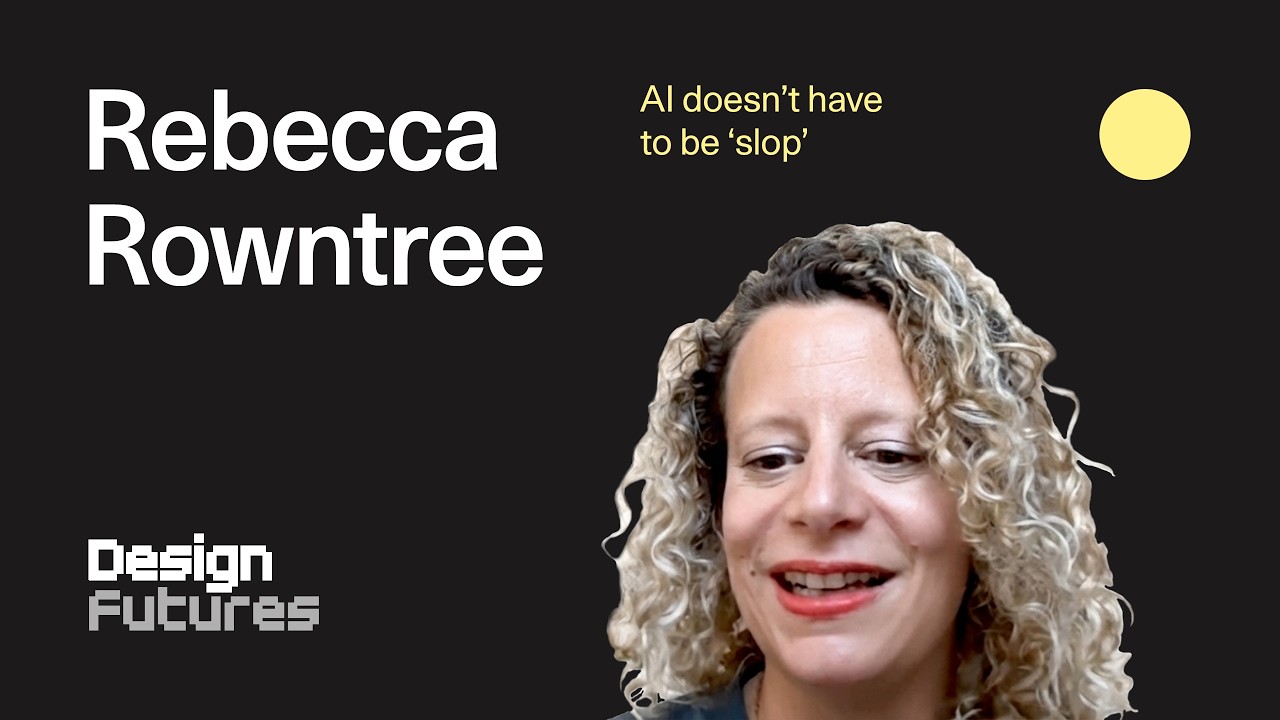
Rebecca Rowntree
Creative director and AI technologist Rebecca Rowntree on agents, experimental AI and using automation to protect time for ideas, craft and judgement.
Watch the podcast