Top 5 Innovative AI Labs Working on the Future of Intelligence
AI today is driven by LLMs, these labs are researching new approaches including real world understanding
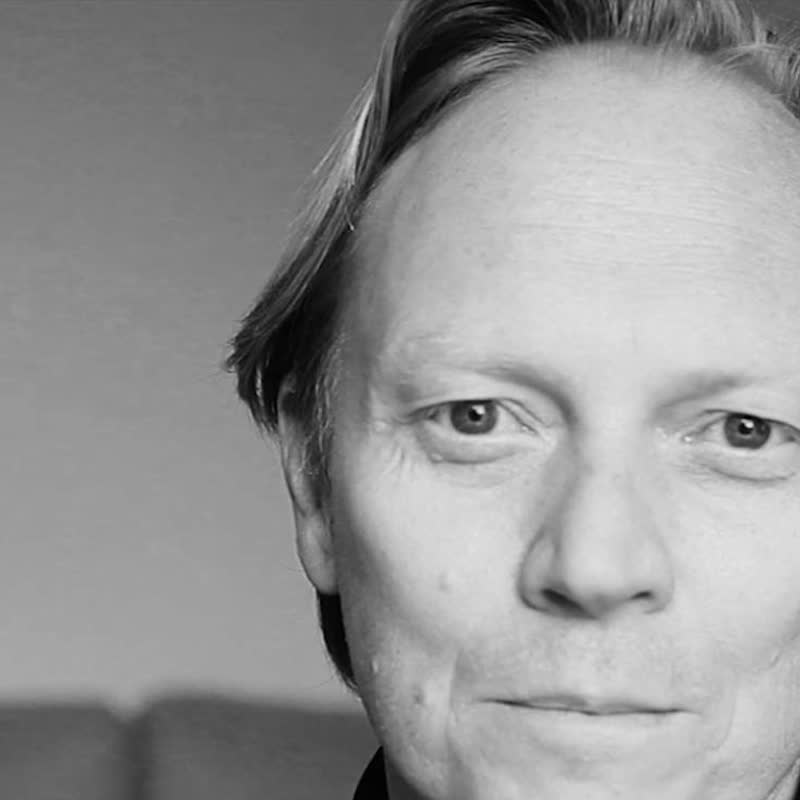
These are five of the most innovative independent AI labs working on the next generation of intelligence: Thinking Machines Lab, Safe Superintelligence, AMI Labs, Black Forest Labs, and Cosine. Each is taking a different path beyond the current frontier model race — from interaction models and safe superintelligence to world models, visual AI, and sovereign coding intelligence.
At a glance: 5 top innovative AI labs
- Thinking Machines Lab — human-AI interaction models and customisable intelligence.
- Safe Superintelligence — a pure research bet on safe superintelligence.
- AMI Labs — Yann LeCun's post-LLM approach to world models and planning.
- Black Forest Labs — open-weight visual AI and the FLUX image model family.
- Cosine — sovereign coding intelligence and reasoning-led software agents.
1. Thinking Machines Lab — United States
When Mira Murati left OpenAI in September 2024, she had overseen the development of GPT-4, DALL-E, and ChatGPT — arguably the three most consequential AI products of the decade. The company she built next reflects both what she learned and what she came to question. Founded in February 2025 alongside a core group of OpenAI alumni including Lilian Weng and John Schulman, Thinking Machines Lab raised $2 billion at a $12 billion valuation within its first five months — one of the largest seed rounds in Silicon Valley history — before closing a $5 billion Series B at a $50 billion valuation in early 2026.
The lab's central thesis is that AI should work with people rather than replace them. Where most frontier labs race to produce bigger, more autonomous systems, Thinking Machines is building what it calls interaction models — AI capable of processing input and generating responses simultaneously, more like a phone call than a text chain. The architecture is a deliberate departure from the standard turn-taking interface that defines every major model currently deployed.
Its first commercial product, Tinker, focuses on model fine-tuning — giving developers and researchers the tools to customise AI systems for specific tasks using efficient post-training techniques rather than brute-force compute. The philosophy signals something important: Thinking Machines is betting that the next meaningful value creation in AI will come from adaptability and customisation, not from whoever trains the largest next model.
Murati retains a decisive board vote, giving her unusual structural control over the company's direction. That control matters: Thinking Machines is the most prominent lab to argue, through its architecture rather than its press releases, that the current paradigm of AI as an oracle to be consulted is the wrong model entirely.
2. Safe Superintelligence — United States
No product. No papers. No public roadmap. Safe Superintelligence Inc. is the most radical institutional bet in AI — and possibly the most important lab nobody outside the industry is talking about. Founded in June 2024 by Ilya Sutskever, one month after he departed OpenAI, SSI has raised $6 billion at a $32 billion valuation with a team of roughly twenty researchers split between Palo Alto and Tel Aviv. It has committed publicly to building nothing until it has built safe superintelligence.
Sutskever's credentials justify the conviction investors are placing in that silence. He co-authored AlexNet — the 2012 paper that launched the modern deep learning era — served as OpenAI's chief scientist for nearly a decade, and led the research teams behind GPT-2, GPT-3, GPT-4, and the o1 reasoning model. He has won the NeurIPS Test of Time Award three consecutive years. When he says the scaling era is over and that pre-training on internet text has reached its limits, the AI research community listens.
SSI's thesis is structural rather than rhetorical. Sutskever describes AI history in three phases: a research era from 2012 to 2020, a scaling era from 2020 to 2025 in which adding compute reliably produced capability gains, and a new research era from 2026 onwards that demands genuine algorithmic breakthroughs. SSI is designed specifically for that third phase — a lab with no commercial products to distract it, no deployment pressure to compromise it, and no short-term revenue expectations to bend its research agenda.
Meta attempted to acquire SSI in 2025. Sutskever declined. That refusal, perhaps more than any funding announcement, signals the seriousness of the mission. SSI may ship nothing for years. It may also define what comes after the current generation of AI.
3. AMI Labs — France

To understand why Yann LeCun left Meta to found a startup at 64, you need to understand what he thinks Silicon Valley has got badly wrong.
His diagnosis is blunt: much of the industry has become what he calls "LLM-pilled" — so convinced that scaling large language models will eventually produce human-like intelligence that it has created a monoculture. Powerful in some areas, but blind to its own ceiling.
LeCun is one of the three researchers known as the Godfathers of AI. He, Geoffrey Hinton, and Yoshua Bengio shared the 2018 Turing Award for the breakthroughs that brought deep learning into the mainstream. His critique of LLMs therefore carries a different weight than the usual scepticism — it comes from someone who helped build the foundations the current wave is built on. LLMs, he argues, are built around language. The real world — cameras, robots, industrial sensors — is messier and far harder to predict. A different approach is necessary.
Advanced Machine Intelligence Labs, founded in Paris in December 2025, is that approach made institutional. AMI raised $1.03 billion at a $3.5 billion pre-money valuation in March 2026 — Europe's largest seed round on record — backed by Nvidia, Bezos Expeditions, Samsung, and Temasek. Its technical foundation is JEPA, the Joint Embedding Predictive Architecture LeCun developed at Meta: a framework that trains systems to learn from reality, understand consequences, and predict outcomes in abstract representation space rather than reconstructing surface details token by token. Building better language models, LeCun has said, is one path forward — but it's a slow one.
The destination AMI is aiming for is considerably more ambitious: systems that can anticipate the outcome of their own actions, plan, reason, and potentially reach human-level intelligence. A complete change, as LeCun puts it, to the blueprints of intelligent systems.
4. Black Forest Labs — Germany
The most significant visual AI company in the world employs seventy people and is headquartered in Freiburg, a mid-sized university city in Baden-Württemberg. Black Forest Labs was founded in 2024 by Robin Rombach and Andreas Blattmann — two of the key researchers behind Stable Diffusion — alongside colleagues from Stability AI. Within eighteen months, the company had raised $450 million in total funding, reaching a $3.25 billion valuation after a $300 million Series B backed by Nvidia, Andreessen Horowitz, and Salesforce Ventures.
The lab's FLUX model family has become the technical benchmark for text-to-image generation — exceeding its predecessors on photorealism, anatomical accuracy, prompt adherence, and fine-grained creative control. Its Flux Kontext editing model introduced something previously unavailable: the ability to edit an image while maintaining character consistency. You can take a photograph of yourself, apply edits, and the result still looks like you.
Robin RombachFounder, Black Forest LabsImage models started from simple text-to-image systems, then expanded into text-plus-image editing and multiple-image composition, and now it becomes even more interesting when all of these modalities are combined inputs and outputs of the same model.
Black Forest Labs operates a deliberately subversive business model in a market dominated by locked APIs and subscription tiers. Its core releases are open-weight — free to use, fine-tune, and deploy. The community-built ecosystem that follows open releases extends the lab's reach and generates the enterprise conversations that convert to commercial licenses and API contracts. Rombach describes the mix as roughly fifty-fifty between usage-driven API revenue and enterprise licensing.
What makes Black Forest Labs remarkable is not just its output but its restraint. The founders speak openly about building a sustainable company rather than chasing scale, avoiding over-dependence on capital markets, and proving that world-class generative AI research can be built outside San Francisco. In a landscape where every visual AI announcement emanates from the Bay Area, Freiburg is making a quietly radical argument — that the centre of gravity for this technology does not have to be where the money is.
5. Cosine — United Kingdom

Founded in London in 2022, Cosine has outperformed OpenAI, Anthropic, Mistral, and DeepSeek on independent coding benchmarks for two consecutive years. It has done so on $8 million in total funding. That combination — benchmark dominance on a fraction of the capital — is the clearest signal in the current AI landscape that architectural approach matters more than compute budget.
The lab was co-founded by Alistair Pullen, who shipped his first iOS app at age nine, and Yang Li, who previously scaled Mobike to 220 million users across four continents. A Y Combinator graduate, Cosine's core insight was methodological: rather than training its model, Lumen, on code artifacts — commits, pull requests, final outputs — the team spent a year building tools to forensically reconstruct the implied reasoning and decisions behind how human developers actually work. The result is a model that doesn't approximate coding; it approximates thinking.
That distinction matters enormously in practice. Most AI coding tools work well on isolated tasks and break down on longer, multi-threaded work in production codebases. Cosine was built specifically for the point where those tools fail: legacy infrastructure, multi-agent orchestration, code that other people on your team will need to maintain.
In April 2026, the UK Government selected Cosine as a partner in its £500 million Sovereign AI programme, granting it 500,000 GPU hours on the Isambard-AI supercomputer. Weeks later, Cosine announced Lumen Sovereign — Britain’s first sovereign frontier AI model — co-designed with BT, Lloyds, NatWest, BAE Systems, Babcock, and LSEG. For organisations operating at the classified edge of British industry, where sending code to a foreign-managed server is legally prohibited, Cosine is the only viable option. It built that way from the start. The defence primes and nuclear infrastructure operators now signing memoranda of understanding are not discovering Cosine — they are arriving at a destination it was always heading towards.