Are brands ready for a future economy powered by machines?
AI agents will search, compare and buy for us. Brands must continue to attract consumers while also becoming understood and trustworthy to machines.

A new economy is forming in which many customers will not be people. AI agents will search, compare, negotiate and transact on our behalf, and brands will need to become legible to machines without becoming meaningless to humans.
In a recent conversation with Raoul Pal, the investor describes AI agents as a new population of “digital immigrants”: software workers able to create economic activity, consume energy and compute, and transact at a scale humans cannot match. His forecast is intentionally provocative. Within five years, he argues, billions of agents could be operating across an increasingly invisible economy.
The important idea is not the exact number or timetable. It is the structural shift. Agents do not need to browse a website, watch an advert or walk through a shop. They can communicate through APIs, model context protocols and payment rails. They can compare thousands of options continuously, purchase data in small packets and execute decisions at machine speed.
Pal’s thesis closely echoes BlackRock’s recent paper, The Machine-Native Economy, which argues that AI provides machine-native intelligence while digital assets may provide machine-native money and settlement. Commerce is beginning to acquire a second operating layer: one designed for software acting for people, businesses and eventually other software.
For brand leaders and managers, this changes the customer journey - a machine may decide which brands make the shortlist for a human task or search, without any prior knowledge or understanding about the product or brand. The agents didn't see the brand comms on socials or the advert at the airport, they are selecting options for the person blindly.
The next customer may never visit your website
An AI agent will encounter a brand through data before it encounters it through design. It may assess price, availability, delivery, provenance, product specifications, guarantees, privacy policies, service history and independent reviews in seconds. It will compare what the brand says with what customers, retailers, regulators and publishers say about it.
This does not make visual identity irrelevant. People still create desire, express taste and decide what a purchase means about them. But an agent may perform the first act of selection. If the brand’s product data is incomplete, its claims are unverified or its policies differ across channels, it may be excluded before human emotion has a chance to work.
Bain’s research into AI-led discovery already points in this direction. AI recommendations are assembled not only from brand websites but from reviews, comparison platforms, earned media and other third-party sources. A brand no longer controls its description; it influences the evidence from which that description is generated.
Brands will have to design for two audiences
The most resilient brands will be designed for humans and agents at the same time, using different forms of persuasion.
| Human audience | Agent audience |
|---|---|
| Emotion, memory and meaning | Structured facts, constraints and relevance |
| Visual and verbal distinctiveness | Machine readability and consistent identifiers |
| Narrative and cultural resonance | Evidence, provenance and update history |
| A feeling of trust | Reviews, policies and performance |
| Designed experiences | Reliable APIs, feeds and transaction paths |
The human-facing brand creates recognition, desire and belonging. The agent-facing brand provides confidence that a recommendation can be made and an action completed. These are not competing identities. They are two expressions of the same promise.
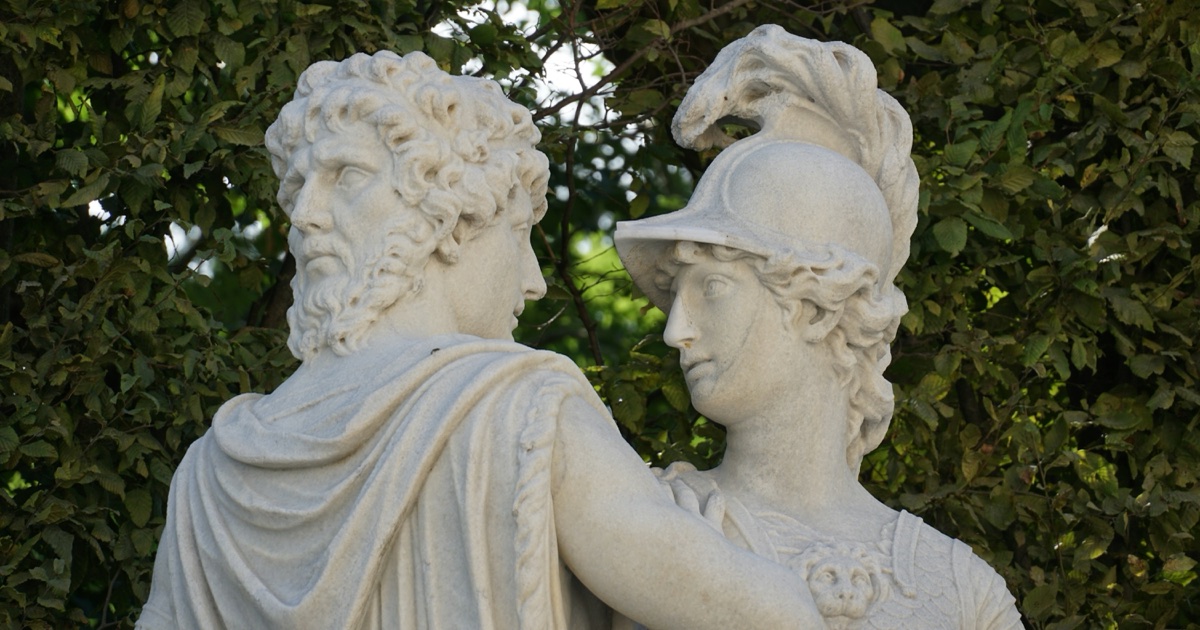
The opening image, Johann Wilhelm Beyer’s Janus and Bellona in Vienna’s Schönbrunn Palace Gardens, gives that duality a face—or rather, two. Janus looks backwards and forwards at once, connecting experience and history with beginnings and possibility; brands will need the same continuity as they learn to speak differently to humans and agents.
This expands brand design beyond visual and verbal identity into behavioural and machine-readable identity. Brand guidelines will need to explain not only how a company looks and sounds, but how its systems disclose evidence, negotiate permissions, respond to uncertainty and act when no human representative is present.
Wolff Olins has described this shift as treating brand as infrastructure and encoding values into interactions “where humans aren’t in the room”. VML goes further in its paper Have My Agent Call Your Agent, proposing brand agents and APIs capable of serving external consumer agents. The technology and marketing conversations are underway. The design discipline connecting meaning, evidence, behaviour and experience is still being formed.
Every industry will need its own agent strategy
There will be no universal formula for winning an agent’s recommendation because relevance and risk are different in every category. A consumer-goods brand will need to manage verified reviews, product specifications, availability, delivery, returns and recurring evidence of real-world performance with exceptional discipline. A bank or wealth manager will be judged through a different lens: demonstrable expertise, product suitability, fees, risk, service quality, regulatory standing and the clarity with which benefits and limitations are explained. In travel, current availability, recent reviews, location and cancellation terms may dominate. The brand passport provides common infrastructure, but each industry must decide which facts, proofs and behaviours deserve the greatest weight—and design its agent experience accordingly.
What is a brand passport?
A brand passport is a canonical, machine-readable record of who a brand is, what it offers, what it promises and what evidence supports those promises. It gives AI systems a trusted point of reference instead of asking them to infer the brand from scattered pages, feeds and third-party descriptions.
It is not a PDF brand book and it is not simply an llms.txt file. A mature passport would connect stable brand identifiers, positioning and values with live product information, verified claims, policies, provenance, service standards, permissions and clear ownership of every data field. It could be expressed through structured web data, product feeds, APIs, knowledge graphs and agent-accessible documentation.
Early versions are already visible. AKQA’s website has an LLM file that gives AI systems a concise account of its values, capabilities and work. It is not a complete brand passport, but it demonstrates the principle: brands are beginning to package themselves deliberately for machines.
A good passport would allow an agent to answer four questions with confidence: Is this genuinely the brand it claims to be? Is the offer relevant to my human? Are the claims current and supported? Can I safely complete the next action?
Is your brand ready to be chosen by an agent?
The following checklist turns the idea into a practical brand-management brief. It is not a technical compliance exercise. It asks whether the brand’s meaning, evidence and behaviour remain coherent when the first audience is software.
Can a machine understand, verify and confidently choose your brand?
Establish a brand passport
- Do you have a canonical, machine-readable record of the brand’s identity, values, offers and policies?
- Does it connect every important claim to a source, owner and review date?
- Can an external agent distinguish official brand information from imitation or outdated content?
Create one source of truth
- Are product, price, availability, location and service data consistent across every channel?
- Do websites, apps, retailers, marketplaces, feeds and APIs use the same identifiers and definitions?
- Is there a clear owner for resolving contradictory information?
Keep claims current and evidenced
- Is brand messaging up to date, specific and supported by evidence?
- Are sustainability, privacy, performance and provenance claims independently verifiable?
- Can an agent see when information was published, changed and next due for review?
Govern reputation as data
- Are you monitoring reviews, complaints, returns and service performance across third-party sources?
- Can you identify recent trends rather than relying on a historic average rating?
- Do public responses demonstrate how the brand behaves when something goes wrong?
Design agent behaviour
- Have you defined how the brand’s own agents recommend, negotiate, disclose uncertainty and ask for consent?
- Can consumer agents access accurate information and complete permitted actions without unnecessary friction?
- Is there a designed handover to a human for sensitive, ambiguous or high-value decisions?
The hardest problem is organisational, not technical
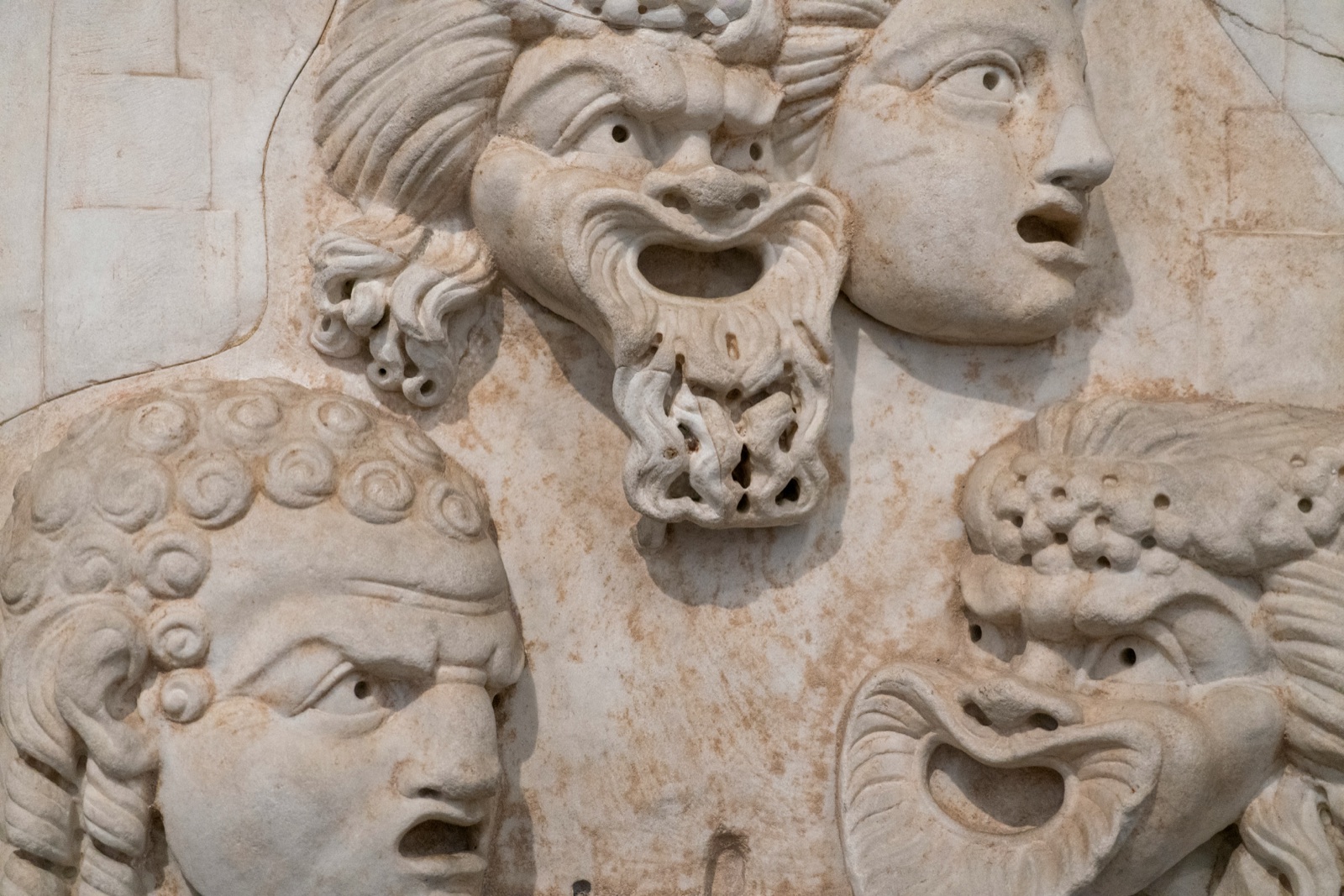
Most large organisations are not structured around a single source of brand truth. Brand, marketing, ecommerce, product, technology, CRM, customer service, sustainability, legal, communications and regional teams each own a different part of the experience.
An organisations channels are treated as separate platforms, 'owned' by siloed teams. A campaign created centrally could be adapted for social media, linking to a landing page written by a product team and published in a unique form across different markets. Inconsistencies can quickly be amplified, leading to a confused set of data the agent needs to process. To a machine, contradiction is not an internal workflow issue; it is evidence that the brand may be unreliable.
That makes agent readiness a governance challenge. The work requires a shared brand-data model, agreed identifiers, named owners, review cycles and rules for resolving conflict. Brand teams will have to work much more closely with technology, data and operations. Technology teams, in turn, will need to understand that meaning and behaviour cannot be reduced to a product feed.
The practical shift is from maintaining a collection of channels to maintaining a brand operating system. Channels become outputs from a common source of identity, evidence and policy. The website, an AI answer, a third party listing and the brand’s own agent should all be able to express the same truth in forms appropriate to their audience. So how do we establish these controls? Mark down files are one solution - writing a description to the brand's visual identity, company architecture and brand codes, which can be shared across an eco-system of corporate channels.
Brand equity is becoming machine-readable trust
The future of branding is not a choice between emotional storytelling and data management. Brands will need both. Human preference will still be formed through culture, experience, memory and design; agent preference will be formed through relevance, evidence, reliability and permission.
If machines become important customers, brand differentiation cannot live only in what people see. It must also exist in what systems can understand, verify and confidently act upon.
The opportunity for brand designers is to shape this discipline before it is defined entirely by software platforms and AI labs. The next great brands will not only be recognised by people. They will be legible to machines, accountable in their behaviour and distinctive across both worlds. What if there are brands that emerge only for an audience of machines? As the technology develops so rapidly, we have to seriously start thinking about these future gazing scenario's. What a time to be creative.