Rendering Is Not Reasoning: The Difference Between Seeing and Understanding
AI image models can render convincing surfaces, but designers need systems that understand visual lineage, reference, intent and judgement.

Image generation can be a frustrating process. I recently interviewed James Addison from the agency For People about a personal book project he made, which imagined a luxury hotel on Lake Como. He explained how hard it was to get consistency; building on an idea until it was just right was a challenging process because of how the models work. They lack visual understanding. They will change the entire image when you only need one area worked on. The quality of lighting and materials has improved over the last two years, especially when you can reference a particular lens or art direction. The reasoning is devoid of intelligence though.
AI image models can render convincing surfaces, but designers need systems that understand visual lineage, reference, intent and judgement.
A model may crop around a problem, replace the wrong object, preserve a source of light that should disappear, or misunderstand the relationship between form, material and space. The image looks polished, but the design thinking is missing.
AI Image Generation Limitations
I have tried a few models. ChatGPT and Awen have led to the best results. They generate iterations, which you can then add to the next prompt, bringing greater context and reasoning. If you feed the models with two visuals and ask them to merge, the results look real, and this can speed up the development process for industries like fashion.
Creating a collection from scratch used to be made by sketching, downloading texture or material references, then creating Photoshop visuals and a tech pack with all the production information and visuals for the factory to understand. In the Parisian brand Vanessa Bruno, the head of knitwear design Florence Salazar signed up for a monthly ChatGPT subscription to experiment with image making for her collections. The trial-and-error process was slow to begin with, and eventually she managed to stop now the LLM from changing the featured model body midway through a development cycle. Step and repeat, but only when the framework for the image is defined.

Visual Research is the Key to AI not Replacing Designers?
A designer understands why an object is there, what must be removed, what must be repaired, and what the image should still mean afterwards. The AI models make a mess of prompts like "create this X in the style of Y". They produce an output which lacks quality and detail, a pastiche of slop. The more precise the design request, the more obvious the reasoning failure becomes.
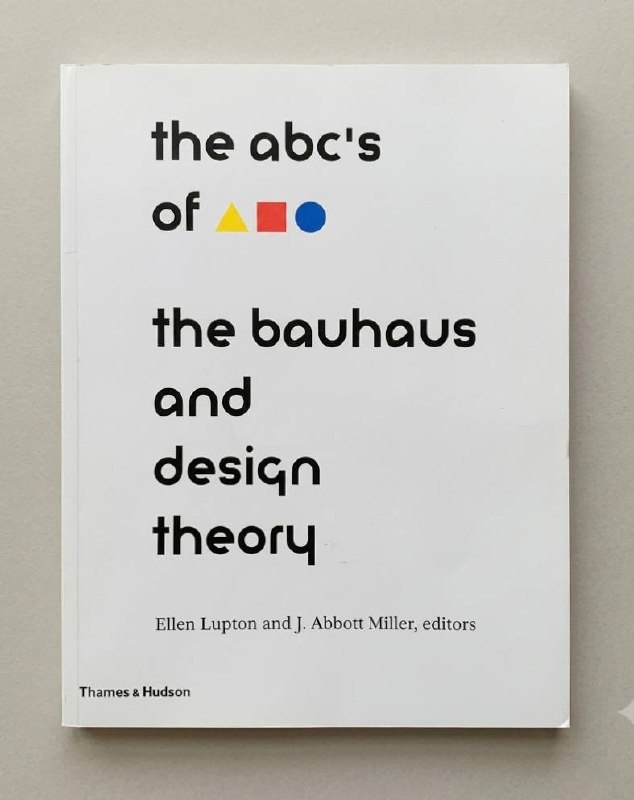
In 2005, after working as a designer commercially for a few years, I decided to step back. I handed my notice in and went back to school. My desire for learning was too strong. I enrolled in the MA Design degree at the London College of Communication, LCP as I still like to call it. After a few introductory seminars on the principles of design and the discovery of classic books like The ABCs of Triangle, Square, Circle, The Bauhaus and Design Theory, our first assignment was to study one of these shapes.
The books and the design research they led to were transformative. Ellen Lupton investigated the influence of geometric shapes in many forms of art and how this had links from psychoanalysis to consumerism. The sense of discovering these connections was more than insightful. It made me question everything I had designed prior to this. Design research and methodologies became part of my early day practice.
I was given a circle: the soft, warm, even intelligent-looking shape set in solid black, stapled to the briefing sheet. We were asked to explore our shapes against criteria like motion, rhythm, sound and space. The assignment was purely conceptual and experimental. There were no commercial restraints or ambitions.
We were encouraged to research our shape through history to understand its foundational relevance; the circle becomes a wheel, the wheel drives industry. The space to explore such an open subject was perplexing. We had no idea what we were doing or where we should go next. This was the brilliance of the project. For a designer, feeling lost has to be resolved. We are problem solvers and need to find outcomes. Visual research was the driver for ideas. Books and libraries were the primary source. We dug deep, discovered and inspired one another to find ideas and perspectives to challenge our shapes further. Interrogation and a little classroom competition, led us to approach our research in interesting ways. We reasoned and tested ideas, not knowing the outcome. How can artificial intelligence explore a similar path? They would need to understand a creative process which we find hard to explain. The idea of the journey and not the destination.
Taste As Evidence Of Quality
In this age surrounded by digital media and emerging, multimodal AI tools, what relationship do we designers still have with our books - our visual references of sources, ideas and stimulation for future work. My collection is treasured, but they are also stacked up, slightly out of reach in my studio. I feel the books and my collection of print references are closely linked to my identity.
We develop our design skills through research, experimentation and thinking. Early on in our careers we are drawn to certain aesthetics over others, we feel emotive connections to design work which is deeply rooted to who we are. These tastes may transcend over time and warp into new ideas, but we cannot ignore these visual bindings. We are the body of our own references. And these references help us to produce work, educational, commercial or art.
Is it our experience and tastes that influence which clients we work with? When speaking with Tony and Evie Brook from SPIN this year, they explained that clients come to them specifically for their work. Their artistic tastes in the work they produce is a clear appeal to some clients. Surely the strongest client-designer relationships are built on these reasons for working together: a respect and therefore trust in producing work to these standards.
Local Models And Private Design Intelligence
Apple's incoming CEO, John Ternus, comes from hardware engineering, which makes the company's next phase especially relevant to this story. There is growing anticipation that Apple's future products will be rebuilt around AI inside the operating system, supported by local models running on the device. For designers, the benefit is not only speed or convenience. It is privacy. A studio or company could keep client work, visual archives and sensitive project data locally, while still using AI tools to process tasks, compare, summarise and reason over that material.
This is where the idea of private visual language models becomes practical. Businesses inside and outside regulated industries could build local LLMs or VLMs around their own needs: brand archives, product imagery, campaign history, client work, technical documents, material libraries and visual references. The intelligence would not need to be trained on everything. It could be connected to the right private material and asked to retrieve, explain and support decisions without sending the archive into a cloud model.
For considered design that matters, a local AI system trained or connected to a studio's own references would not just make images... It could become a private design memory: a way to preserve knowledge, protect client confidentiality and make years of visual research useful again.
We Still Need Designers
Even with better local models, designers are the ones bringing their taste, critique, visual judgement and art direction. Human references make us all unique.
The creative process cannot be automated when developing a visual identity, printed media or digital product design. Elements of a project's deliverables, like formatting different content for distribution or language alternatives, can be given to a visual language model to build, and this does help a lot as the tasks were previously boring and manual.
I do think VLMs could be improved to support the creative process if privately managed libraries were digitised and tagged with real-life descriptions for each image. Details like typefaces used, or even colour references, would ensure the VLM did not hallucinate or serve up the wrong reference when asked.
Currently the frontier labs have trained VLMs on a broad range of licensed materials and internet-scale visual culture. Most models do not disclose their sources. Adobe Firefly, however, declares that internal Stock libraries are the source, along with public-domain content where copyright has expired. This data is not relevant to designers. Leveraging different models due to what works best is often the approach, with a curated product layer to harness the model further.
The VLMs are not missing pixel perfection. They are missing culture.